
We came to Eutaw Place to build. New framing. New spaces. A new chapter for an old house. But before the new began, the house had a few things it wanted to say.
It started with a rifle.
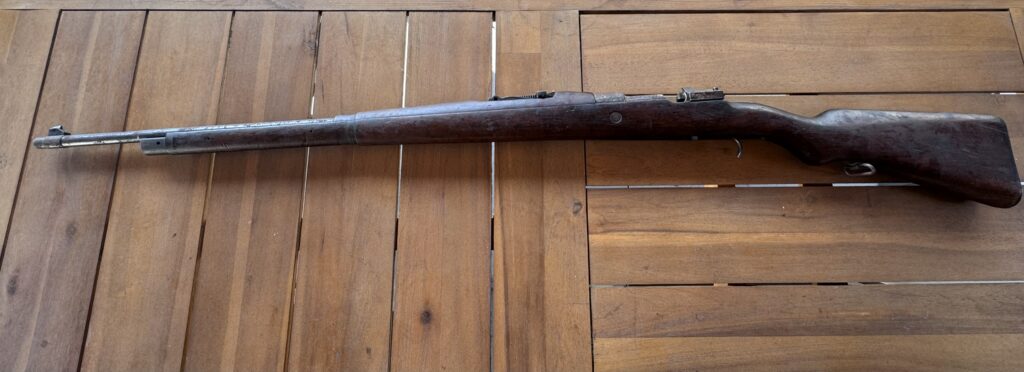
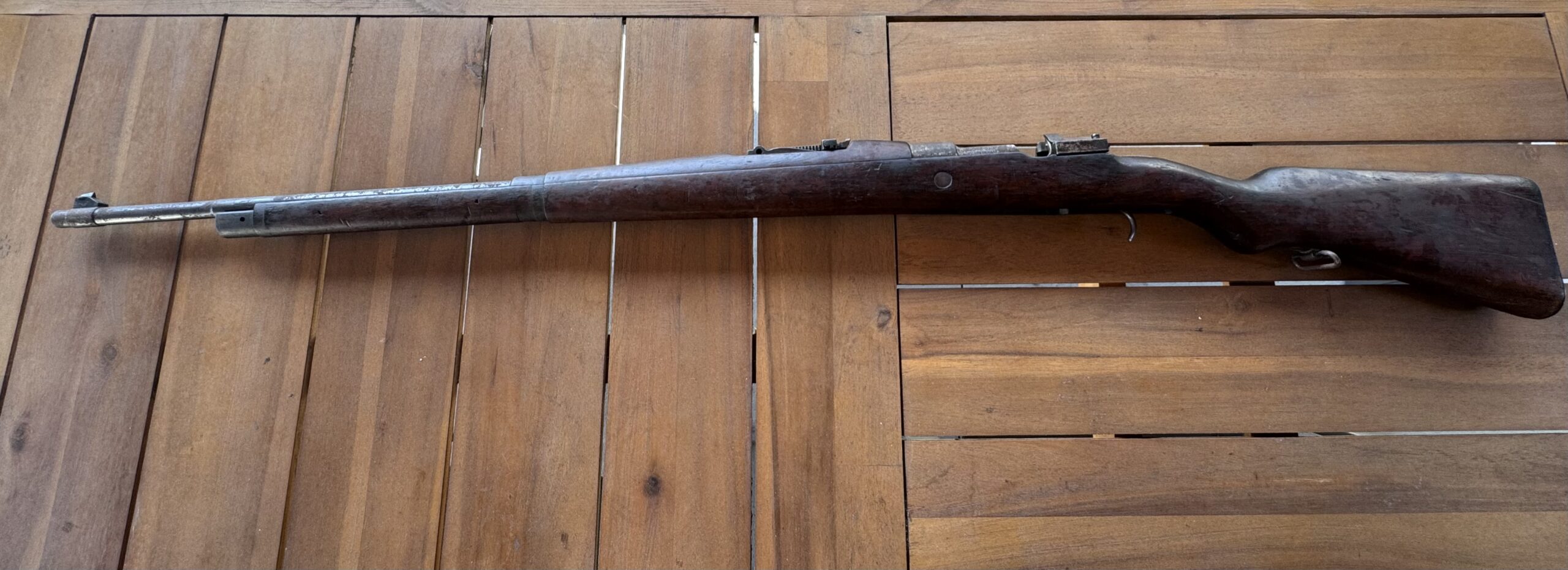
Scott was in the attic when he saw it. Quiet, untouched, forgotten. A Mauser Argentino 1909, a bolt-action rifle built between the first and second World Wars, tucked into the far corner beneath the old rafters. Covered in dust, missing pieces, resting as if it had been waiting for someone to find it.
When he brought it down, I froze.
I’ve worked on historical restorations before, even back in Boston, but I’ve never uncovered something like that. A newspaper? Sure. A magazine wedged between studs? Common. But a century-old weapon left behind in the attic of a house that sat silent for decades? That hits different.
And your mind starts to race. Who put it there? Were they a veteran? Did they mean to hide it, or did it simply get left behind and forgotten by time? How many hands had passed it before mine? Was it part of someone’s story that we’ll never get to hear?
We demo ceilings. We reframe attics. We do this kind of work every day. But in that moment, the jobsite didn’t feel like a project. It felt like a diary that had just flipped open to a page no one had read in years.
Weeks later, it happened again.
We were removing the original hardwood flooring. We hadn’t planned to, but between the weather damage, years of exposure, and lack of climate control, it couldn’t be saved. So we made the call to replace it with the same 2 and 3/4 inch red oak, matching what was there when the house was first built in 1936.
As we pulled up the boards, one of our guys, Jayden, stopped.
There, nestled beneath the floor, was a penny.
1937.
Dropped by someone almost a hundred years ago. Maybe a worker mid-installation. Maybe a homeowner. Maybe a kid. Someone was here, in this room, in this house, right where we were standing. And without meaning to, they left a trace behind.
Not long after, we found a dime. 1949.
And suddenly, this house that we thought we were restoring started restoring something in us.
Because these aren’t just objects. They’re time stamps. Ghost notes. Proof that life happened here, that people built, worked, lived, laughed, worried, celebrated, fell in love, cooked dinner, fixed things, lost things, and made memories, all in the same walls we’re walking through now.
They remind you that you’re part of something longer than your own chapter. And they make you wonder what someone will find when they pull back your layers someday.
We haven’t found anything else yet. There’s word that Ellen, one of the homeowners, might have discovered some old newspapers, but I haven’t seen them myself. For now, the Mauser and the coins are safe in my office, waiting for whatever future story they’ll be a part of.
Will they be displayed in the open house? I hope so, but probably not. Some things belong to the silence.
What matters is this: we’re not just building a house. We’re continuing a story. And every now and then, the house hands us a sentence.
I’ve learned something about Jacksonville. Most of the people who live here aren’t from here. They came, like I did, from somewhere else. They stayed because it felt like home. And maybe that’s what this house is teaching us, that even a building can belong to everyone, no matter where they’re from. That a house isn’t just a structure, it’s a witness. A keeper of little things that add up to a life.
And so we keep going. We build. We restore. We find things. And we leave something behind, too.
Not just wood and stone. But care. Intention. Love.
Because long after we’re gone, someone else might pull up a floorboard, pause, and say, look what they left for us.