
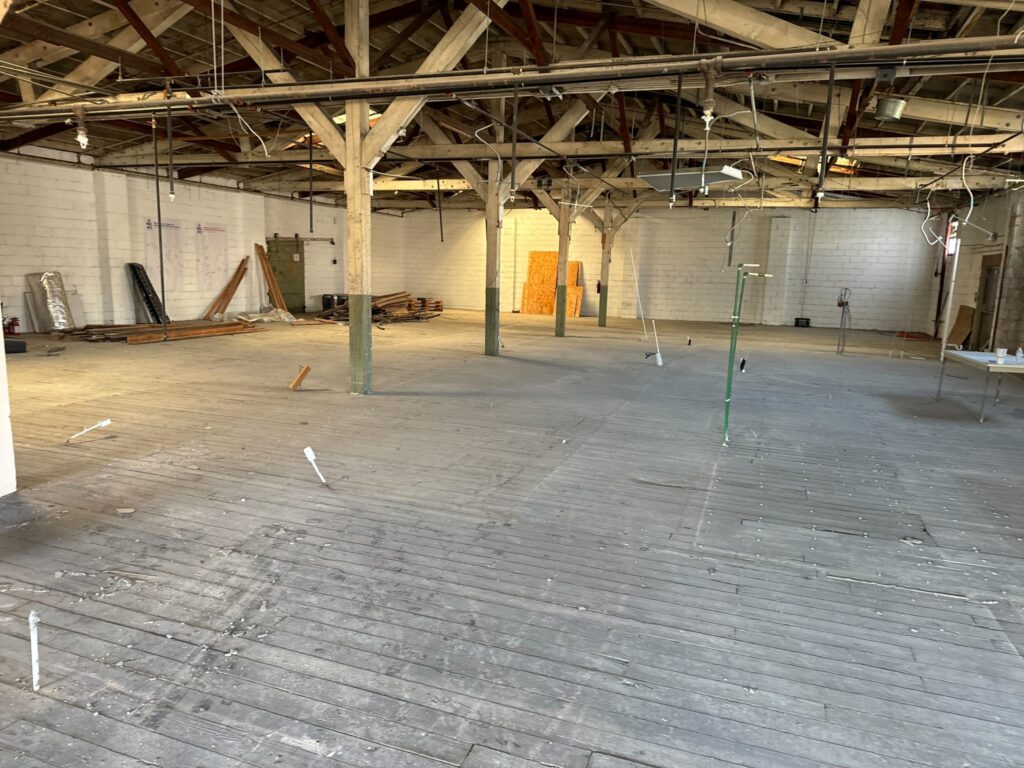
It was probably the early summer of 2023 and we had been contacted by a group that owned several buildings in the Riverside warehouse district of Jacksonville. This particular building was a 1930 elongated structure of 22,000 square feet with wood trusses and concrete block walls and a stucco exterior. There was a unique roof that consisted of three gable sections with each valley connected together. The building had been split into two separate structures, the smaller section with a raised floor and offices and the larger section as a traditional concrete floor warehouse with a high ceiling and ample spacing between the columns. It was well-ventilated with no odor of mold and mildew that we usually find. You could find yourself in the corner space with your eyes closed imaging the hustle and bustle of the place 100 years ago. Almost seeing an old black Ford Model TT with an express pickup body making a delivery.
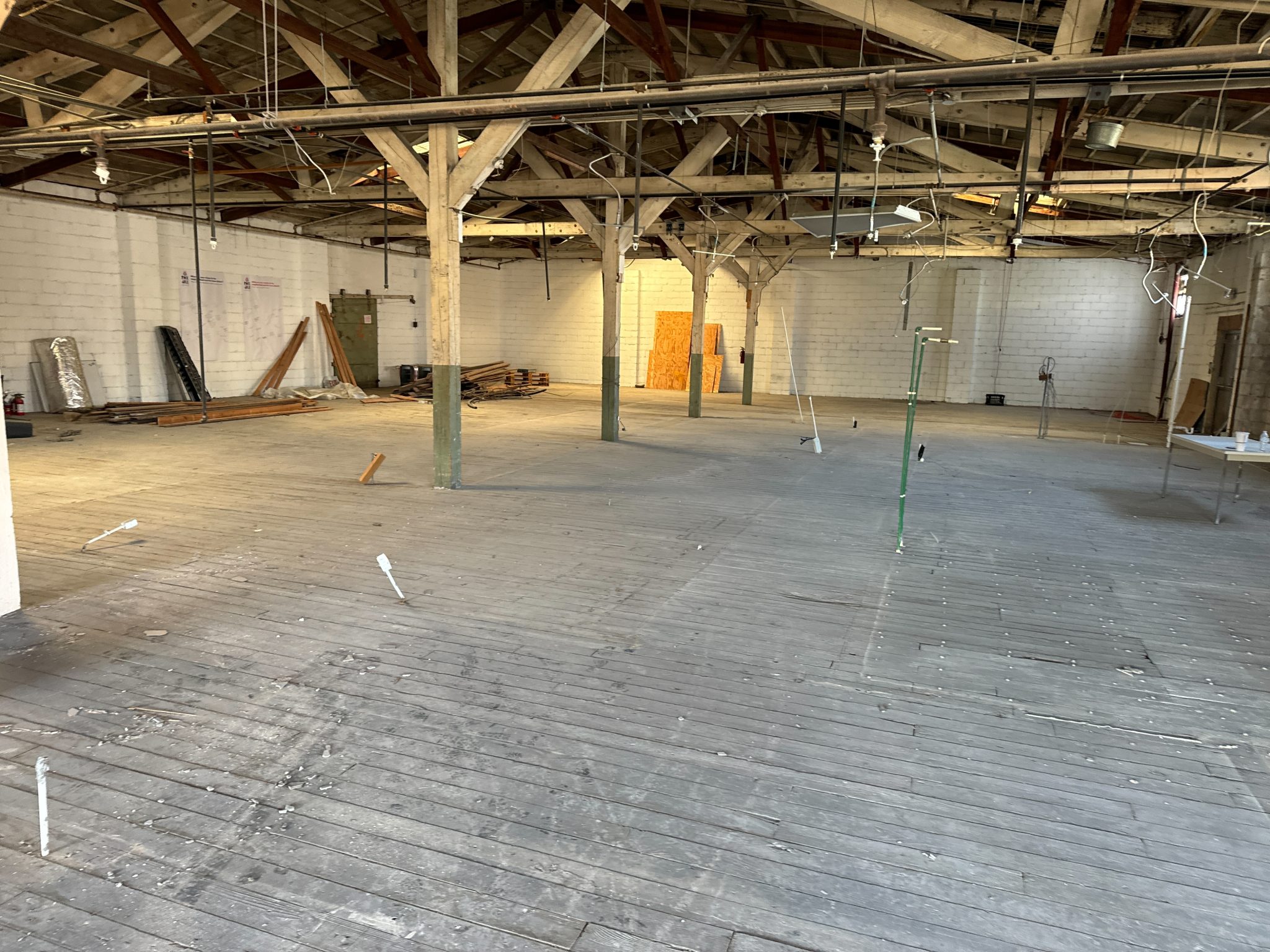
What caught my attention was two striking features; the gorgeous 1-1/8″ thick x 6” wide pine wood plank floor in the office section and the beautiful, insulated pully assisted sliding fire doors separating the two spaces.
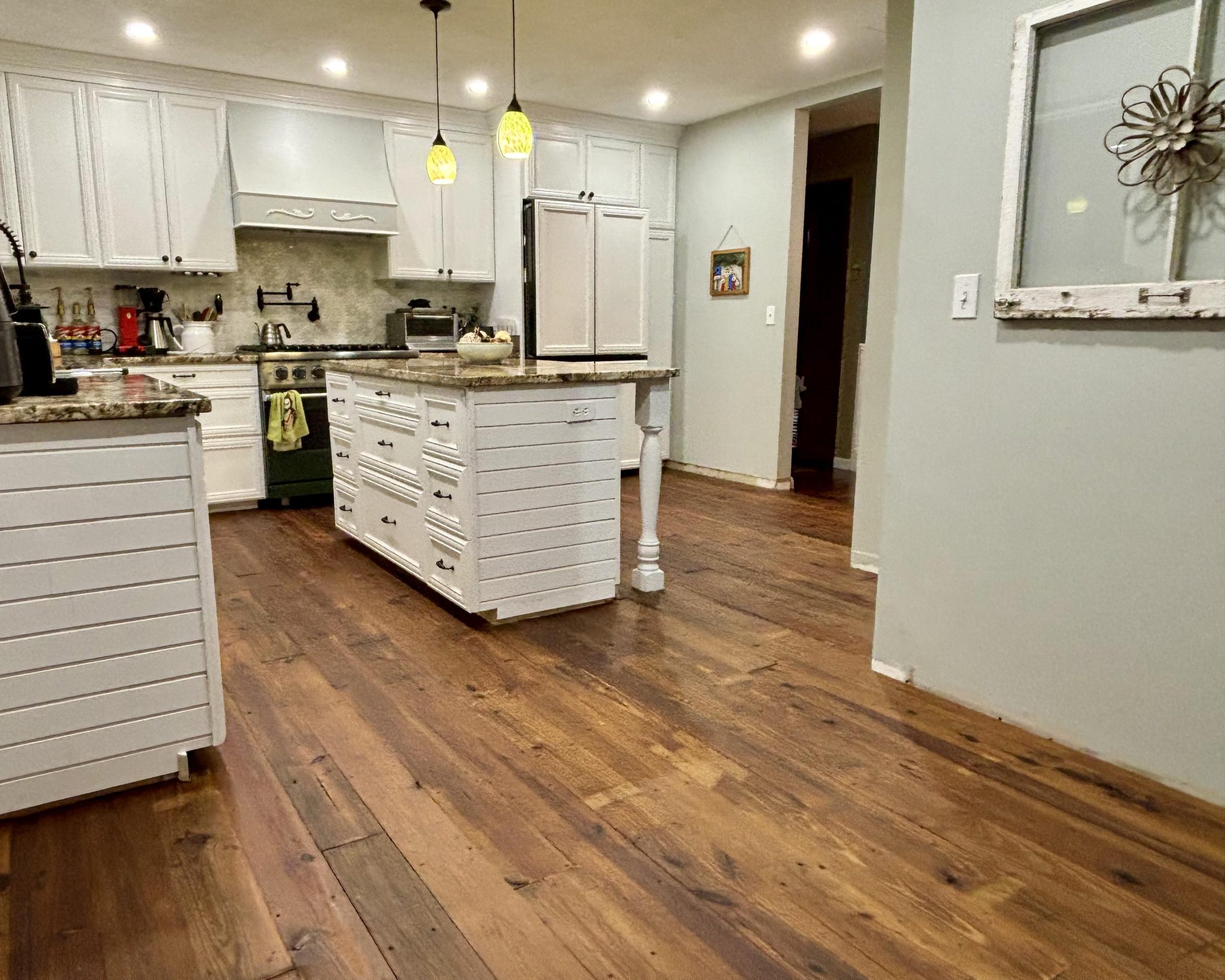
The floors, of course, were refinished and came out beautifully. That experience sparked this story about wood floors. As we neared the end of our personal kitchen remodel, my wife and I were determined to install a historically aged wood floor. We’ve always been drawn to historic cities, or at least the historic districts wherever we travel. One place that especially captivated us was the waterfront district on the Charleston peninsula. The homes there radiate warmth and charm, filled with elegant, handcrafted details. After seeing so many kitchens with old pine floors, often painted white or black, we knew we had to bring that same character into our own home.
At the start of the renovation of this 1930s warehouse, the architect had already finalized his design, and we were in the process of removing non-historic elements from the office section. That’s when I discovered that the interior roof structure had been framed and decked using the same 5/4 (1-1/8”) by 6” wide heart pine planks we admired. I asked the demo crew to set them aside—I was more than happy to take care of them. The boards averaged 16 feet in length and were anything but straight: bowed, cupped, kinked, and twisted. Over the course of a weekend, I mobilized on-site and spent two days pulling what must have been a thousand nails and cutting each board down to 8-foot lengths.
I initially assumed the wood dated back to the original construction of the warehouse in the 1930s, which made the idea of installing nearly 100-year-old flooring in my kitchen especially exciting. As I began working with the planks, I discovered an ink stamp on the underside of one board and started my investigation. The black inked marking read “Wadsworth” on the first line and “SMB-No 2” on the second. That launched me into a bit of research, which led me to the Wadsworth Lumber Company of Flagler County. Founded in 1957 and later sold to ITT in 1974, the company was owned by Lewis Wadsworth Jr., whose father, Lewis Wadsworth Sr., started a turpentine business in the early 1900s. With this new context, I now had a clearer origin for the wood and was excited that it was 50 to 70 years old! Now to focus on refining the planks and preparing them for installation.
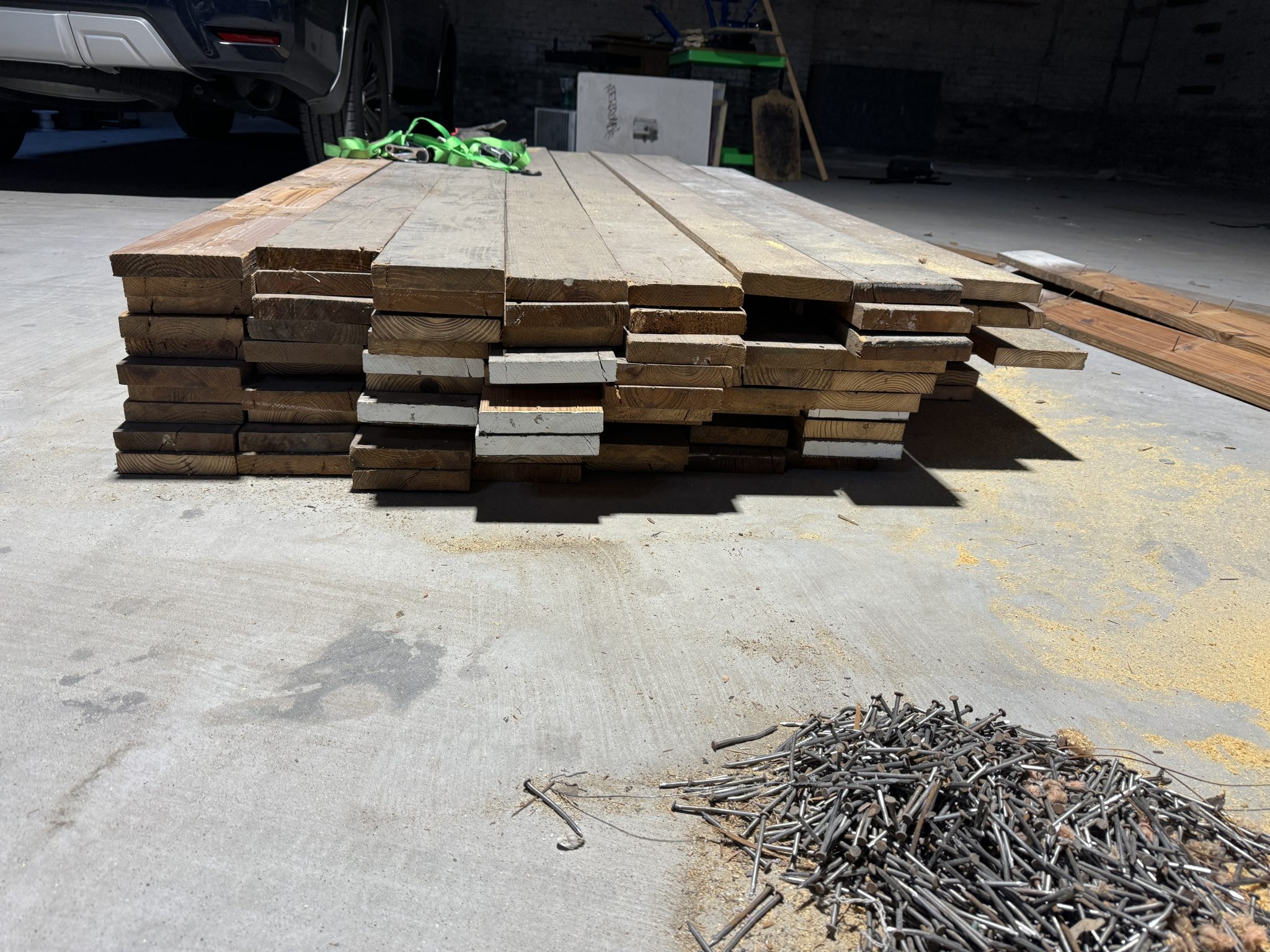
Over a few weekends, I went through my original set of planner blades and two additional sets in order to achieve a final ¾” thickness. Several of the boards had already turned to fatwood (fat lighter). Mistakenly, I ran one through the planner and ended up with yet another new set of planner blades. To help with the condition of the boards, they were all ripped down to 5-3/8” wide. Wanting to keep the aged look of the wood, I only planed down one side of the board, and this side would be the underside of my new old floor. With the best help ever, I measured each piece of wood and my wife cut all the planks down to size, we completed the floor installation in just a few days.
Many people had warned of their concern of installing a wood floor in a kitchen where you can have a lot of spills and water. So I began researching for a product to install to protect it. I determined that the best product for our project was using the Waterlox finishing system. We started with one coat of Truetone Natural finish, and then finished up with two coats of Truetone buff in Tung Oil Finish. For a final touch, I purchased 3/4” copper roofing nails and aged them by soaking them for 24 hours in a solution of steel wool and vinegar. The copper nails were used to fill all the old nail holes. We now have a beautiful, historically old pine wood floor that was milled sometime between 1957 and 1974.